Cinematch
# Building Cinematch: A Full-Stack Movie Discovery Platform

# Introduction
One of the biggest problems with modern streaming platforms is not the lack of content, it’s deciding what to watch. With thousands of movies and TV shows available, users often spend more time browsing than actually watching.
To solve this, We worked on Cinematch, a full-stack web application designed to make movie and TV discovery fast, personalised, and interactive. The goal was to create a platform that feels engaging like a swipe-based app, while still providing powerful filtering, search, and watchlist management features.
This project allowed me to design and implement a complete production-style system covering backend architecture, authentication, database design, API integrations, and frontend interaction.
# The Idea Behind Cinematch
Cinematch focuses on one core principle:
The more you interact, the better your recommendations become.
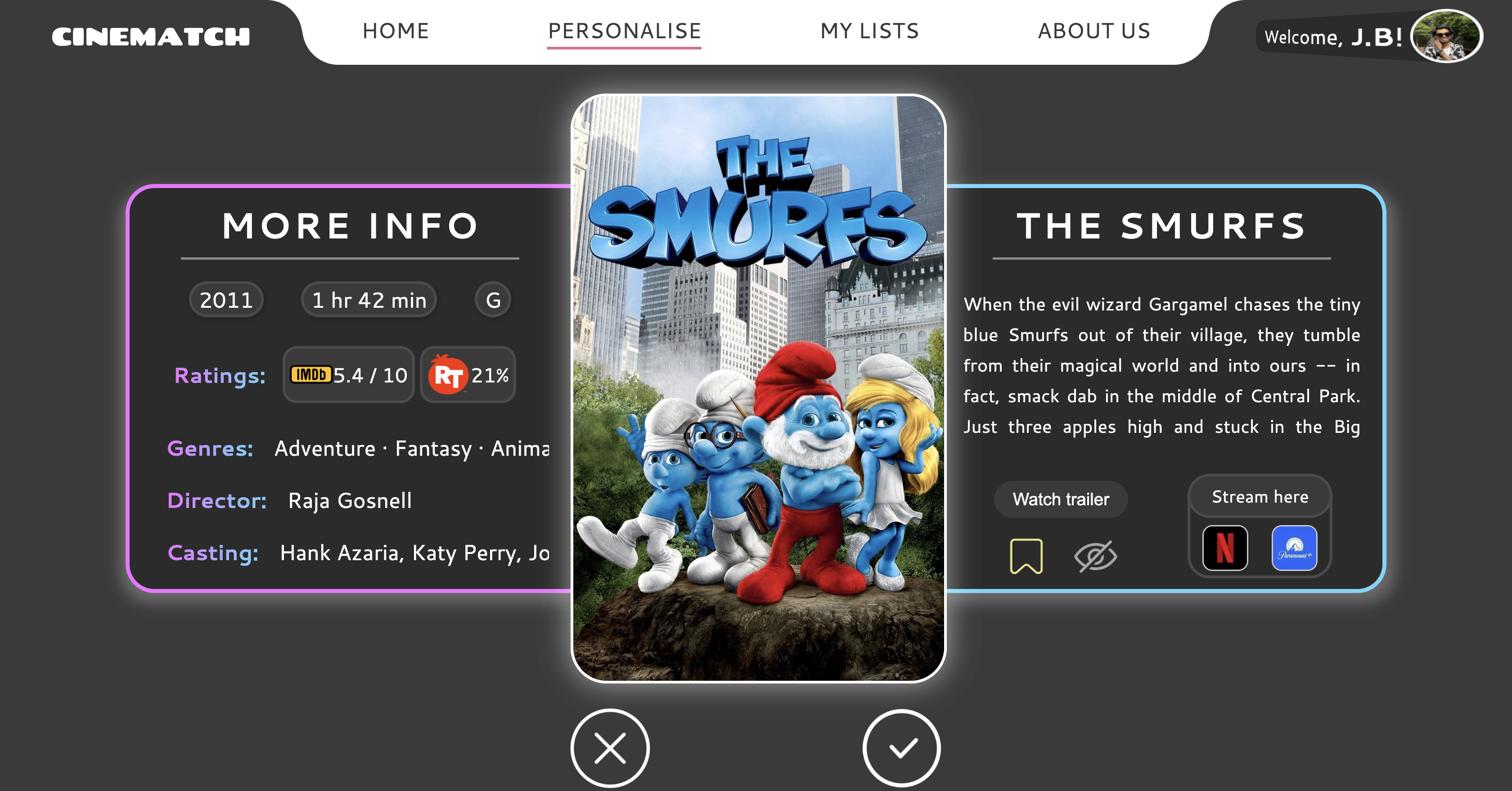
Instead of forcing users to manually search through endless categories, the platform lets them like or dislike content through a swipe-style interface. These preferences are then used to tailor future recommendations.
The experience is designed to be:
- Fast to start
- Easy to use
- Personalised over time
- Fun and visually engaging
# Core Features
Cinematch includes a wide range of functionality expected from a modern entertainment platform:
- Personalised movie and TV recommendations
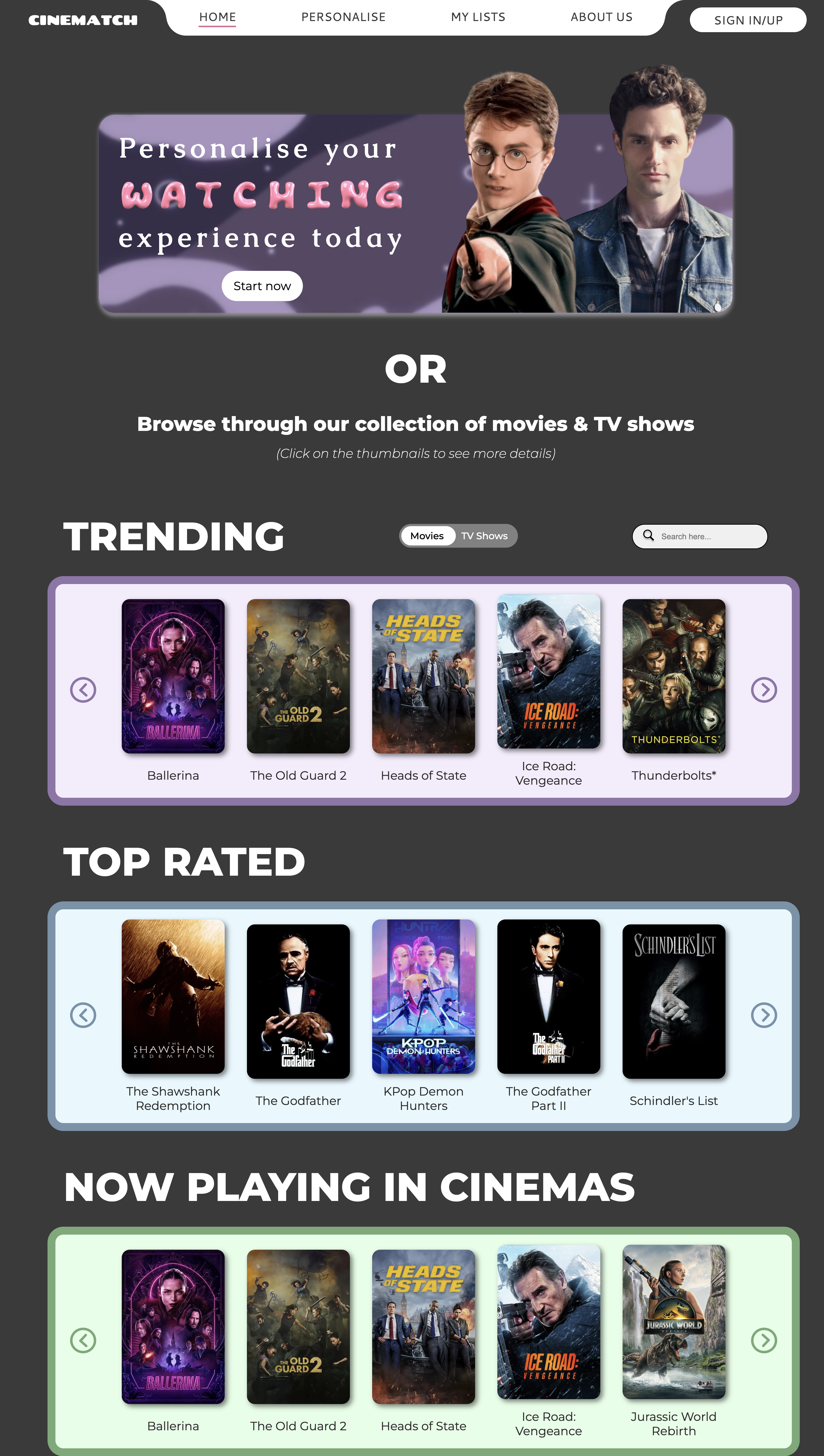
- Homepage showing trending and top-rated media
- Swipe-based discovery system
- Full search capability for titles
- Detailed media pages with extended information
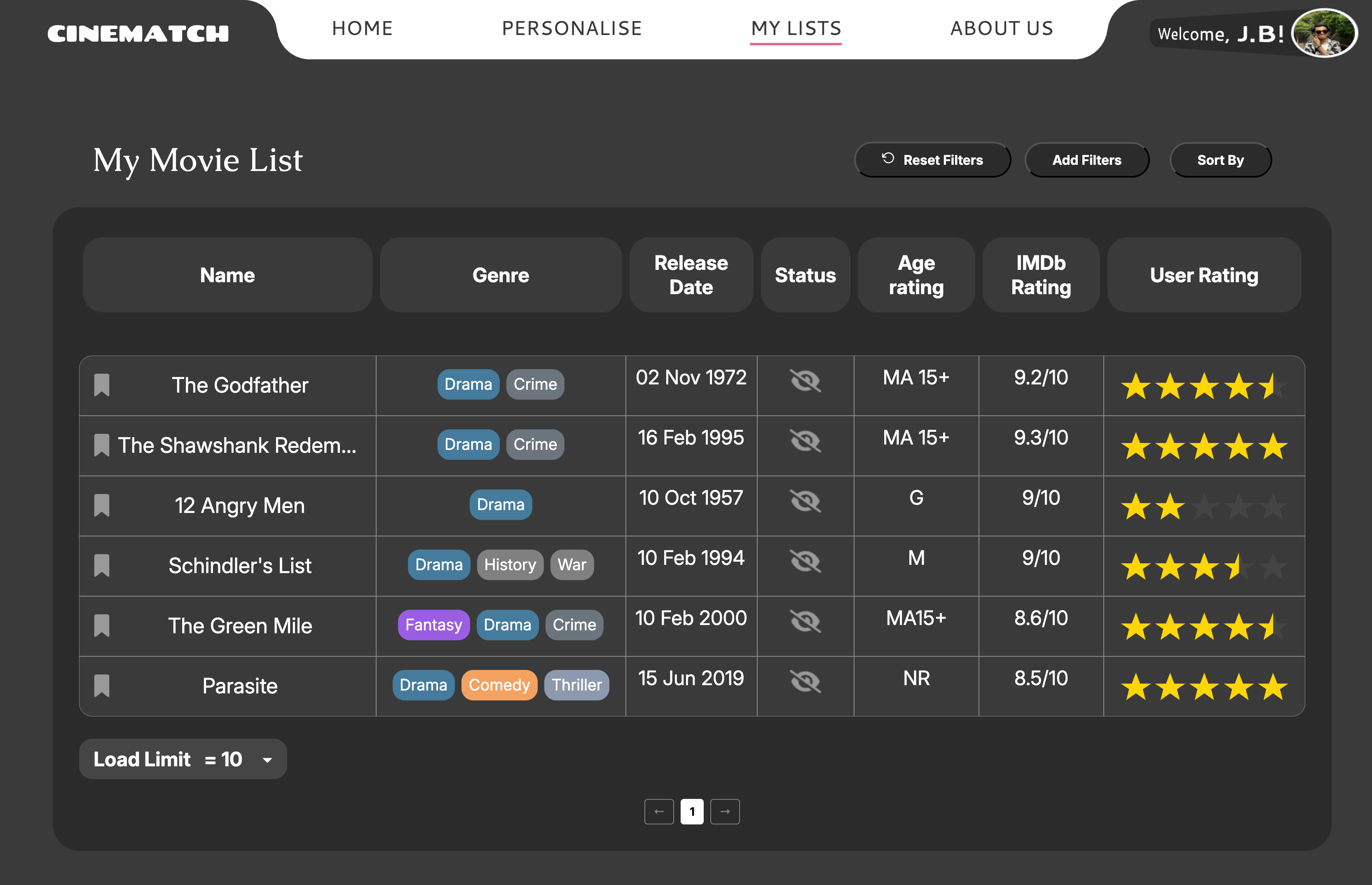
- Personal watchlist with rating and status tracking
- Secure login and signup system
- Sorting, filtering, and management tools
- Admin dashboard for platform control
- Profile picture uploads
- Dark and light theme toggle
These features together create a seamless discovery-to-watchlist workflow.
# System Architecture
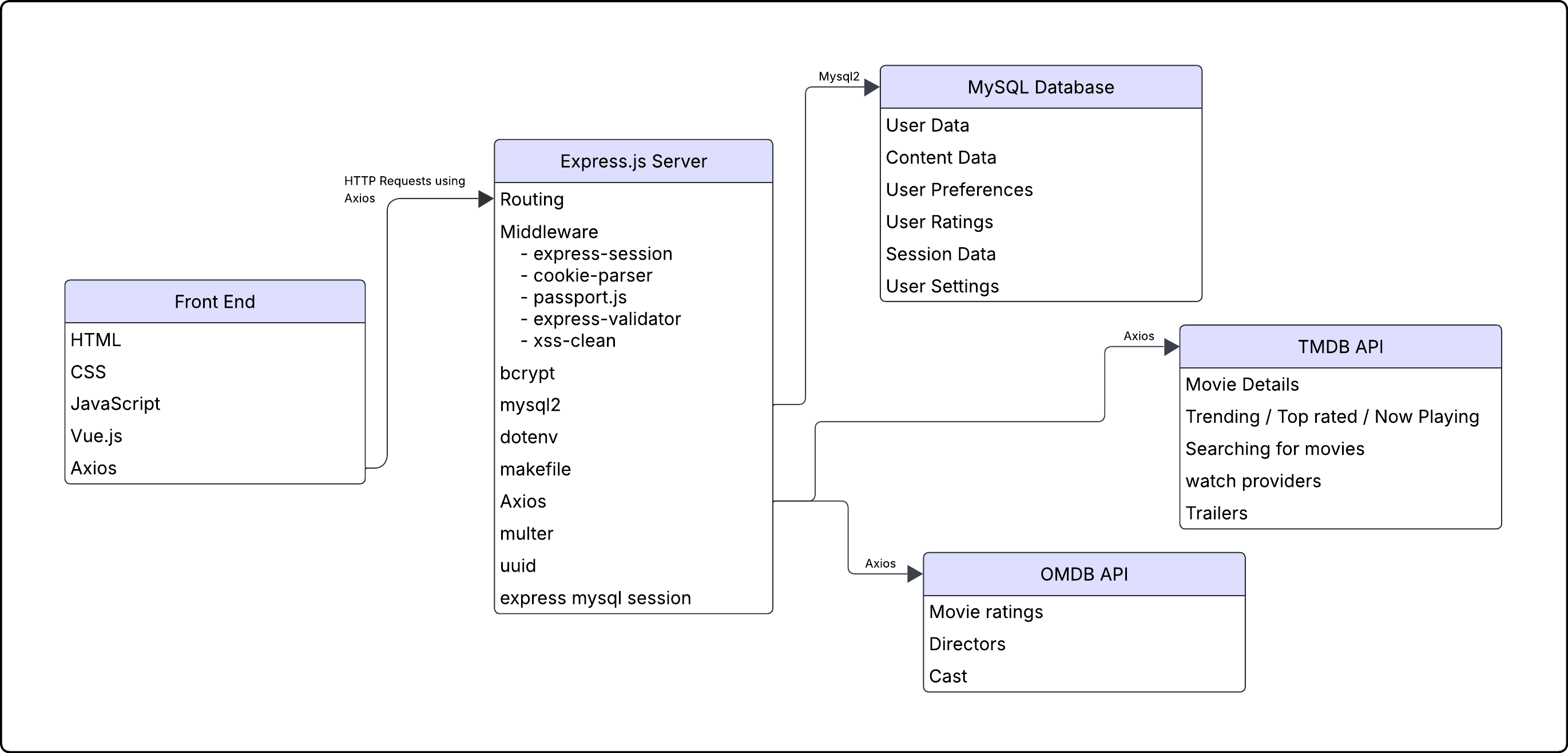
The project follows a structured full-stack architecture:
cinematch/
├── backend/ # Express API
│ ├── app.js
│ ├── db/
│ ├── .env
│ ├── routes/
│ ├── services/
│ ├── uploads/
│ └── views/
└── frontend/ # Static frontend using Vue
# Backend
The backend was built using Node.js and Express, structured around:
- Route controllers for request handling
- Service layers for business logic
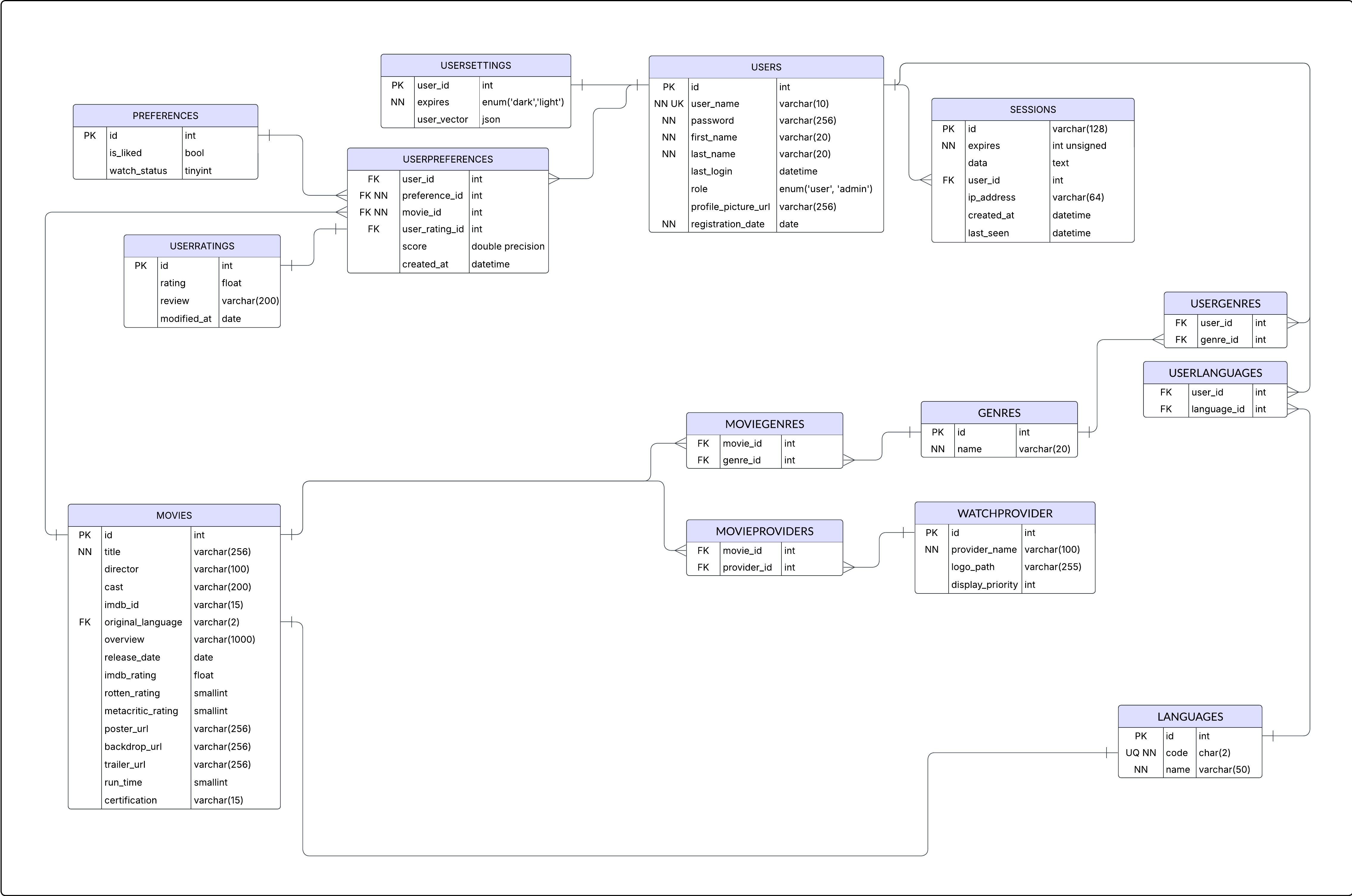
- MySQL database with schema, seed, and view scripts
- Session-based authentication using Passport
Security and stability were important priorities, so the backend includes:
- Password hashing using bcrypt
- Parameterised SQL queries to prevent injection
- Request sanitisation and validation
- Secure session storage in MySQL
The system also integrates external movie data providers via API requests, allowing the platform to dynamically fetch media information.
# Frontend
The frontend combines:
- Vue.js for reactive UI components
- Vanilla JavaScript ES6 modules
- HTML5 and CSS3
The interface was designed to prioritise usability and responsiveness, ensuring users can:
- Browse trending titles
- Swipe through recommendations
- Manage their watchlist
- Switch between dark and light themes
# Development Environment
To make the project easier for contributors and evaluators to run locally, I implemented:
- A VS Code Dev Container setup
- Automated Makefile commands
- Database reset and seed automation
- Environment-based configuration via
.env
This allows the entire application to be launched in just a few commands, recreating a fully working development environment.
# Security Considerations
Security was treated as a first-class concern during development.
The application includes:
- Secure password hashing
- Sanitised user input
- Protection against SQL injection
- Authenticated session management
- Environment variable configuration
Building these protections into the system helped reinforce best practices for production-level web applications.
# What I Learned From This Project
Cinematch was more than just a coding exercise, it was an opportunity to simulate building a real product from scratch.
Through this project I strengthened my experience in:
- Designing scalable backend architecture
- Structuring full-stack applications cleanly
- Managing authentication flows
- Integrating third-party APIs
- Designing interactive user experiences
- Building developer-friendly setup tooling
Perhaps most importantly, it improved my ability to think about software not just as code, but as a complete user-focused system.
# Future Improvements
While Cinematch already provides a complete discovery workflow, there are several planned enhancements:
- Expanded TV show support
- Updated Frontend using react native
- Automated unit testing
- More extensive documentation
- Social “party mode” discovery sessions
- Shareable playlists
- Direct streaming platform linking
These improvements would move the project even closer to a real-world production entertainment platform.
# Screenshots